Fleet Management
Fleet Management Software is your partner for intelligent, digital, and network-based systems for safety and compliance in passenger transportation.You can instantly know what’s happening with your vehicles: an intelligent fleet management system provides transparency across all vehicles.
Fleet Management for your Buses, Trains, and Logistics Vehicles
Your Advantages with Fleet Management
Vehicle Location
Vehicle locations are determined by GPS and logical positioning and transmitted to the operation control center in real time.
Vehicle Status
Vehicle status data is integrated into the operation control center via CAN-BUS and other sources; deviations are detected and corrected at an early stage.
Alarm
Silent alarm triggering by the driver and connection to video cameras in the vehicle may be possible (depending on bandwidth).
Device Status
Information for monitoring and managing other components in the vehicle based on the “Status Management” function.
Reduced hardware requirements
All available resources (components and data) in the vehicle are used.
Cost-optimized
Reducing energy and IT costs by using our cloud platform.
Efficient planning of maintenance work in the vehicle
Technical fleet management monitors vehicle technology and peripheral devices in the vehicle and can provide information about maintenance and service.
Flexible and modular expandable
Modular system design always allows for functional extensions, which can be implemented easily, quickly and cost-effectively.
Open interface architecture
Providing shared resources, e.g. GPS information, IBIS conversion, FMS-CAN-BUS data.
System and Error Analysis
Automatic data collection and evaluation can be used to verify systems in public transport or in terms of the availability (functionality) of components.
Passenger Count
Automatic recording, processing, and communication of counter results, door events, and location data, as well as precise determination of driving and standing times, allows for the extraction of actions from the data.
Fleet/Status Management
Fleet Management determines the location and status information of vehicles, vehicle components, and systems installed on vehicles in real time. The collected data is transmitted to central server systems.
Hotspot
People checking their emails or accessing the most important morning information on the internet while commuting on the bus can turn their often limited time into valuable time. This significantly strengthens your appeal.
Passenger Information
The Passenger Information software package forms the basis of dynamic passenger information systems. It enables the display of information, entertainment, and advertisements (in real time) on TFT/LCD screens.
SafetyNet
SafetyNet provides encrypted data connections between mutually authenticated network units where IP data traffic is routed transparently.
Video Security
DIRECS systems offer maximum features at an excellent price-performance ratio, including active alarm management, live data transmission, and automatic sabotage and motion detection.
Configure your Fleet Management System
BIS Basic Version
The Bus Information System was developed for transportation companies. Buses and trains can be tracked in a targeted manner, and irregularities and errors in the system can be reported centrally and corrected manually.
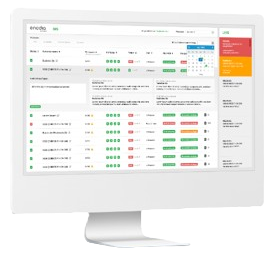
A QUICK LOOK AT THE KEY FUNCTIONS OF THE BIS:
Vehicle location
Overview of all subsystems
For example, digital recording devices can be integrated into the general system
Information about firmware version and update request
A note can be added to each event and this is created as a date. It is displayed to the user.
The list of relevant recording devices can be filtered in different ways.
BIS Modular Extension: AFZ Number of Passengers
Passenger counting systems can be easily integrated into the Bus Information System. Here, information on the number of passengers on buses and trains provides insights into vehicle capacity utilization and usage. Identifying journey and stop data leads to the optimization of route and travel planning.
BIS Modular Extension: Video Protection
For the safety of all of us, cameras have been used on buses for years. These record and document what happens inside and around individual buses. Vehicles are centrally monitored, and malfunctions and breakdowns can be quickly detected and rectified. Through the BIS system, the driver also has the option of sending alarm recordings to the control center with the push of a button. This is important both for emergencies and for important messages.
BIS Modular Extension: FMS-CANBus
The Bus Information System not only monitors the cameras on the buses, but it is also possible to integrate the FMS-CANBus system. The information here includes tire pressure, oil level, or, if applicable, error messages for individual vehicles. An important tool here is the data history. All measured values are stored and can be read later. For example, if the oil pump fails, it is possible to determine precisely whether this fault was caused by, say, dry running of the pump.
